Cross-Modal Perception: The Permeable Boundary of Sense
"THE VIEWER DOES NOT MERELY SEE THE SURFACE.
AT THE LEVEL OF THE NERVOUS SYSTEM, THE VIEWER INHABITS IT."
The difference is not merely stylistic. Rembrandt's technique signals softness to the visual cortex through reflected light, while Freud's thick, dragged impasto signals resistance and friction. The viewer does not decide to feel these things; the nervous system simply responds.
How the brain simulates touch
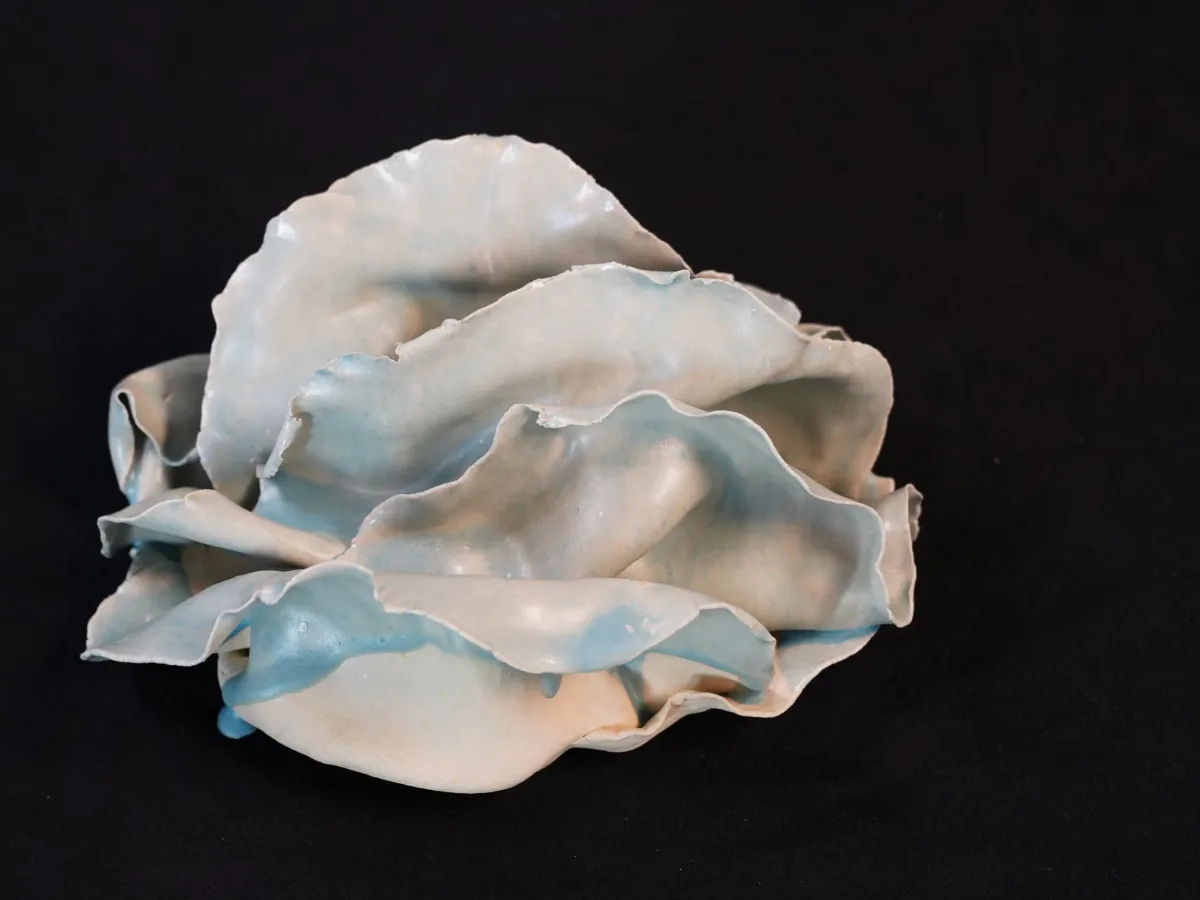
The key structure in this process is the secondary somatosensory cortex (SII). Neuroimaging studies show that viewing images of textured surfaces activates SII even when no physical contact occurs. The activation is stronger when the texture is unfamiliar or in close proximity—conditions that signal to the brain that the surface is within reach.
Mirror neurons appear to mediate this response. When an artist's gesture is visible—the loaded brush marks of a de Kooning or the knife strokes of a Richter—the brain reconstructs the action that produced it. Viewing becomes, at a neural level, a form of physical participation.
Texture in healing contexts
Art therapists understand that the physical quality of materials matters. Working with coarse, highly tactile media helps patients with trauma reconnect with bodily sensation safely. Conversely, smooth surfaces reduce sensory load and activate the parasympathetic nervous system, inviting "grounding" through repetitive, soft movement.
In dementia care, texture has emerged as a vital tool. Where verbal communication declines, tactile and procedural memory often persist. Programs that prioritize tactile richness over visual complexity report measurably improved affect and social engagement.
Choosing texture with intention
Surface quality is not an aesthetic afterthought but a physiological parameter. For clinical environments, smooth to mid-range textures support regulation. For educational spaces, moderate complexity supports attention without overstimulation.
The question is not only "what do I see?"
but "what does my body feel?"
For private collectors, texture should be treated as a third axis of selection alongside colour and subject matter. It allows the body to be enrolled in the encounter, making passive, distracted viewing impossible and creating a deeper, more permanent connection with the work.