 EN
EN  DE
DE 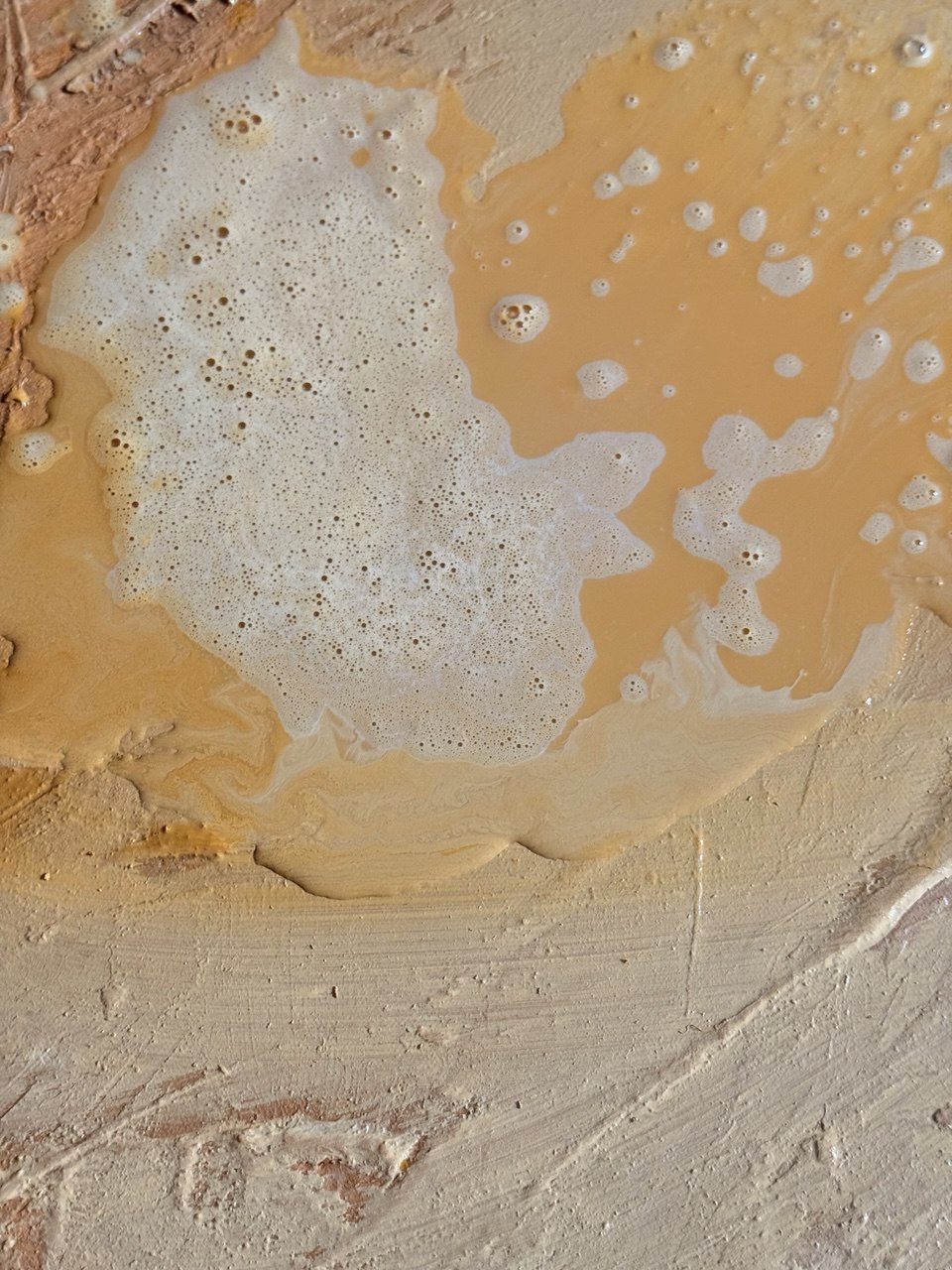
When we look at a rough, heavily impasted surface the brain does not simply register colour and form. Mirror neuron circuits linked to the somatosensory cortex activate, simulating the sensation of actually running a finger across the surface.
This is a cross-modal phenomenon: the visual system and the tactile system share neural real estate, and the boundary between seeing and touching is far more permeable than common sense suggests.
This is why a Rembrandt glazed in transparent oils can feel silky at a distance, while a Lucian Freud feels almost uncomfortably raw. The difference is not merely stylistic. Rembrandt's technique of building up thin, luminous glazes produces a surface that reflects light gradually, signalling softness to the visual cortex.
Freud's thick, dragged impasto, applied with palette knives and stiff bristles, creates sharp ridges that cast micro-shadows, signalling resistance and friction. The viewer does not decide to feel these things. The nervous system simply responds.
How the brain simulates touch from vision alone
The key structure in this process is the secondary somatosensory cortex (SII), located in the parietal operculum. Neuroimaging studies have shown that viewing images of textured surfaces activates SII even when no physical contact occurs.
The activation is stronger when the texture is unfamiliar or when the image is of high resolution and close proximity, conditions that signal to the brain that the surface is within reach.
Mirror neurons, first identified in motor circuits and later found to play a role in sensory anticipation, appear to mediate this response. When an artist's gesture is visible in the work, as in the loaded brush marks of a de Kooning or the palette knife strokes of a Gerhard Richter, the brain reconstructs not only the surface but the action that produced it.
Viewing becomes, at a neural level, a form of participation.
"THE VIEWER DOES NOT MERELY SEE THE SURFACE.
AT THE LEVEL OF THE NERVOUS SYSTEM, THE VIEWER INHABITS IT."
Texture in therapeutic and healing contexts
Art therapists have long understood, intuitively, what neuroscience is now confirming: the physical quality of materials matters as much as their colour or form. Working with coarse, highly tactile media, clay, rough-textured canvas, sand trays, and heavily loaded paint helps patients with trauma reconnect with bodily sensation in a controlled and safe setting.
Conversely, smooth, predictable surfaces and media are used with patients in acute distress or in states of high arousal, precisely because they reduce sensory load and invite the kind of slow, repetitive movement that activates the parasympathetic nervous system.
The repetitive smoothing of clay, the long strokes of a soft brush across a prepared ground: these are tactile forms of grounding, restoring contact with the present moment through the body.
In dementia care, texture has emerged as a particularly important tool. Where verbal communication and explicit memory decline, tactile and procedural memory often persist longer.
Art programmes in memory care settings that prioritise tactile richness over visual complexity report measurably improved affect and social engagement.
Choosing texture with intention
The neuropsychological lesson is this: in any space where art is placed, surface quality is not an aesthetic afterthought but a physiological parameter.
A highly textured work in a recovery room will not simply look different from a smooth one; it will have different effects on the autonomic nervous system of the person in that room.
For clinical and therapeutic environments, smooth to mid-range textures generally serve better, reducing cortical load and supporting parasympathetic regulation. For educational and creative spaces, moderate texture complexity supports engaged attention without tipping into overstimulation.
For public spaces intended to provoke reflection, strong texture can be an ethical choice: it enrols the body in the encounter and makes passive, distracted viewing less possible.
For private collectors, the recommendation is to treat texture as a third axis of selection alongside colour and subject matter. The question is not only "what do I see?" but "what does my body feel, and is that the feeling I want to live with?"