 EN
EN  DE
DE 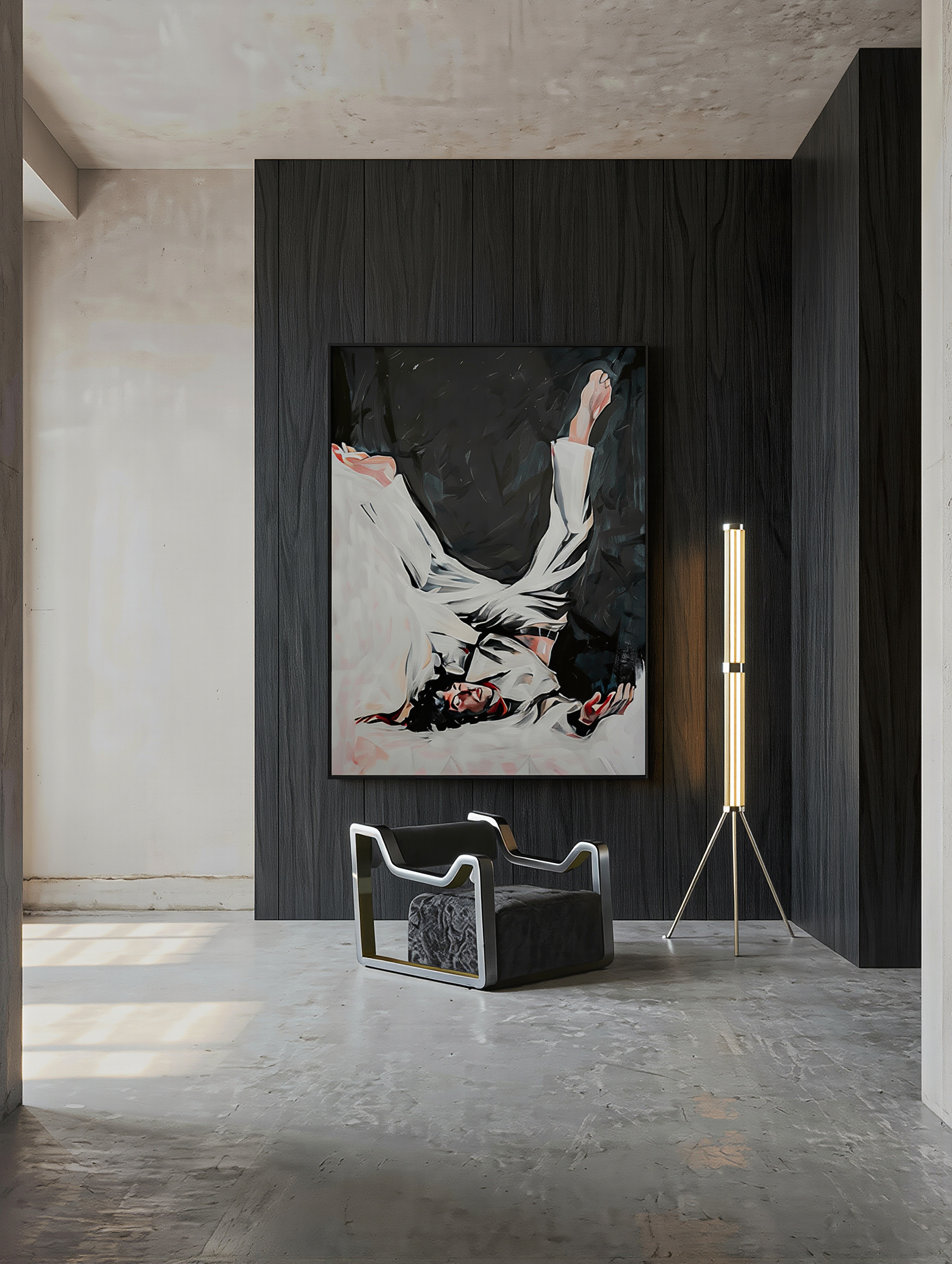
What defines minimalism now is not strictness, but sensitivity.
Recent design presentations this year reveal a clear shift. The sterile, almost clinical minimalism of the past is giving way to something warmer, more tactile, more alive. We see the emergence of what could be described as “emotional minimalism.”
— Spaces remain clean, but no longer cold
— Materials become richer, more sensual
— Forms soften, embracing organic curves
— Objects feel collected, not imposed
"I am not interested in minimalism as an aesthetic.
I am interested in creating spaces with soul."
— VINCENT VAN DUYSEN
Between Art and Design
Another important shift is the dissolution of boundaries. Furniture increasingly behaves like sculpture. Objects are no longer purely functional; they carry narrative, presence, and emotional charge.
Minimalism, in this context, becomes a frame. It allows materials, craftsmanship, and concept to speak without distraction. The result is a new kind of quiet expressiveness.
The Language of Contemporary Luxury
Luxury today does not announce itself loudly. It reveals itself slowly. Minimalism plays a central role in this transformation. It demands precision, discipline, and exceptional quality. Nothing can be hidden. Every detail is exposed.
This creates a different kind of value. One that is not based on abundance, but on exactness.
"The best things are the simplest."
— CALVIN KLEIN
In 2026, simplicity is no longer simple. It is deeply considered, highly curated, and emotionally intelligent.
Experiencing More
Minimalism today is not about having less. It is about experiencing more: more clarity, more presence, more depth. It is an invitation to slow down and to see.
And perhaps, in that space of reduction, something essential becomes visible again.